
Article 6 of 9 · PMWEB for Contractors and Subcontractors
Both Sides of Every Contract
A contractor sits between two sets of contracts. Above it is the client, who pays late and disputes variations. Below it are subcontractors and suppliers, who expect to be paid on time and claim for every change. A contractor that manages these two sides in separate spreadsheets is always reconciling, and always one step behind its cash.
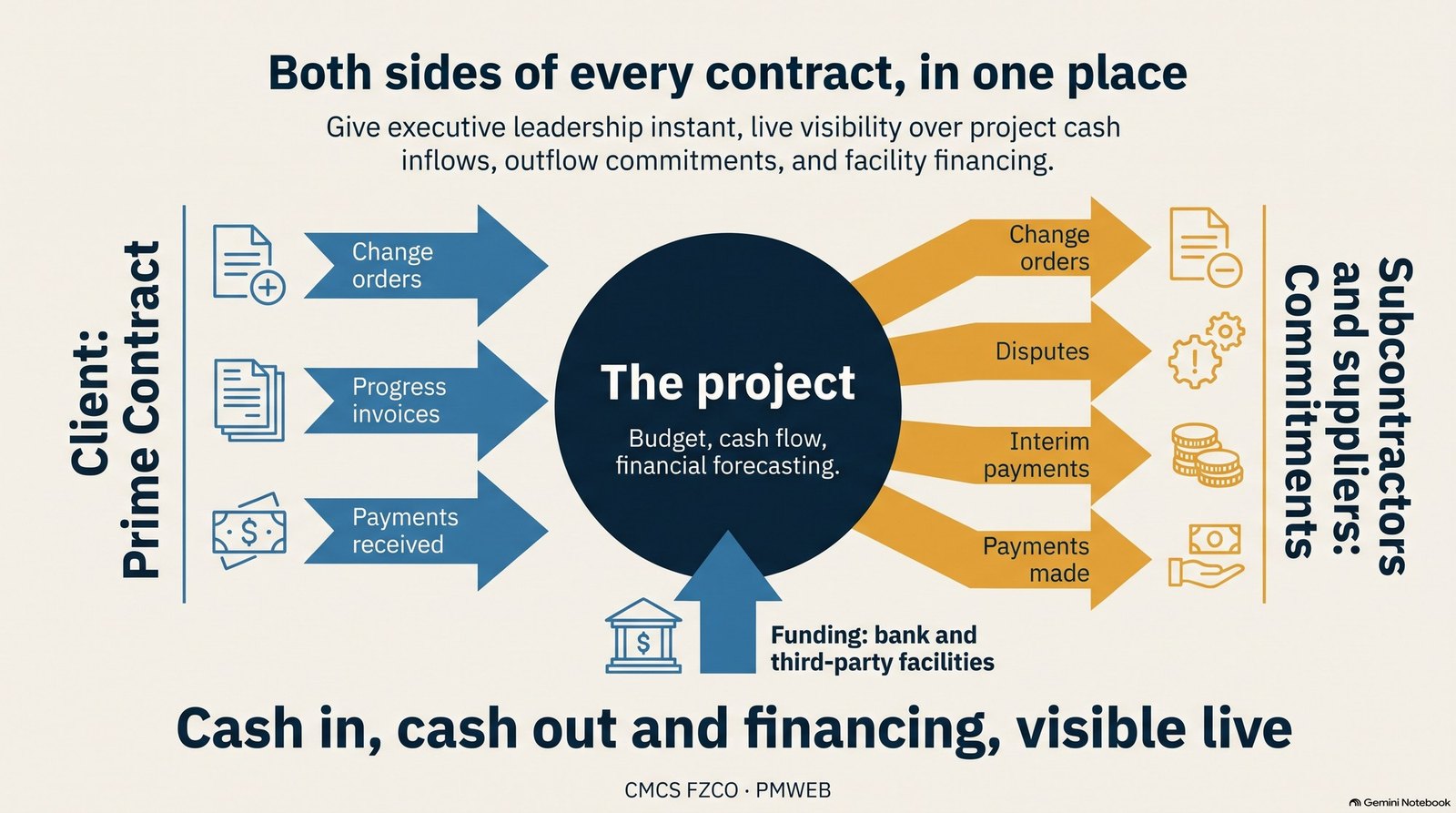
This article shows how PMWEB manages both sides of every contract in one project record: the Prime Contract with the client, and the Commitments with subcontractors, suppliers and internal units, with change orders, progress invoices, payments and funding connected throughout.
The Income Side: Prime Contract
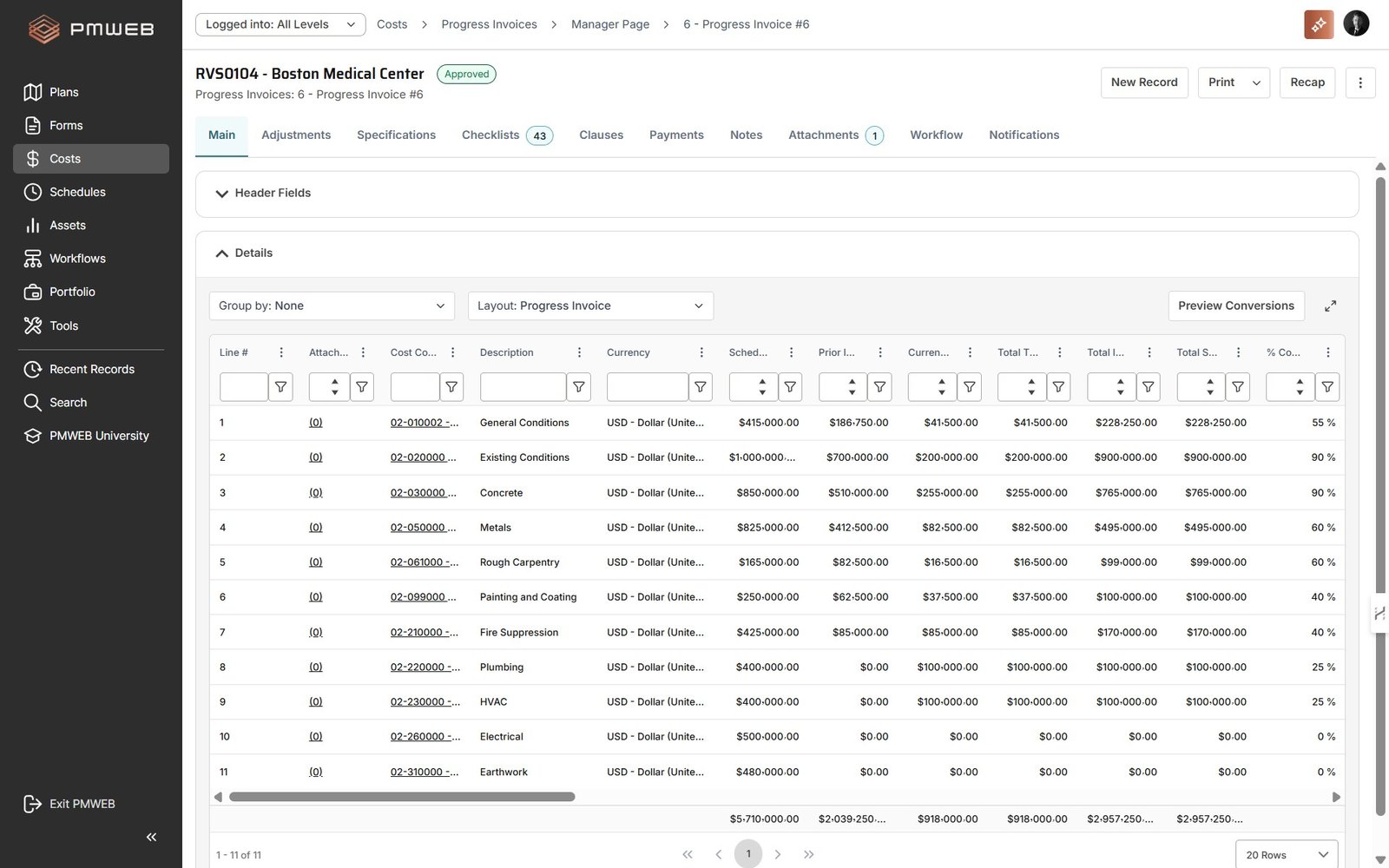
The Prime Contract holds the schedule of values created from the selling price (Part 3), with the contract's terms: advance payment, retention, recovery of advance, payment period, bonds and liquidated damages. Against it the contractor records:
- Change orders claimed from the client, with their status from potential to submitted to approved.
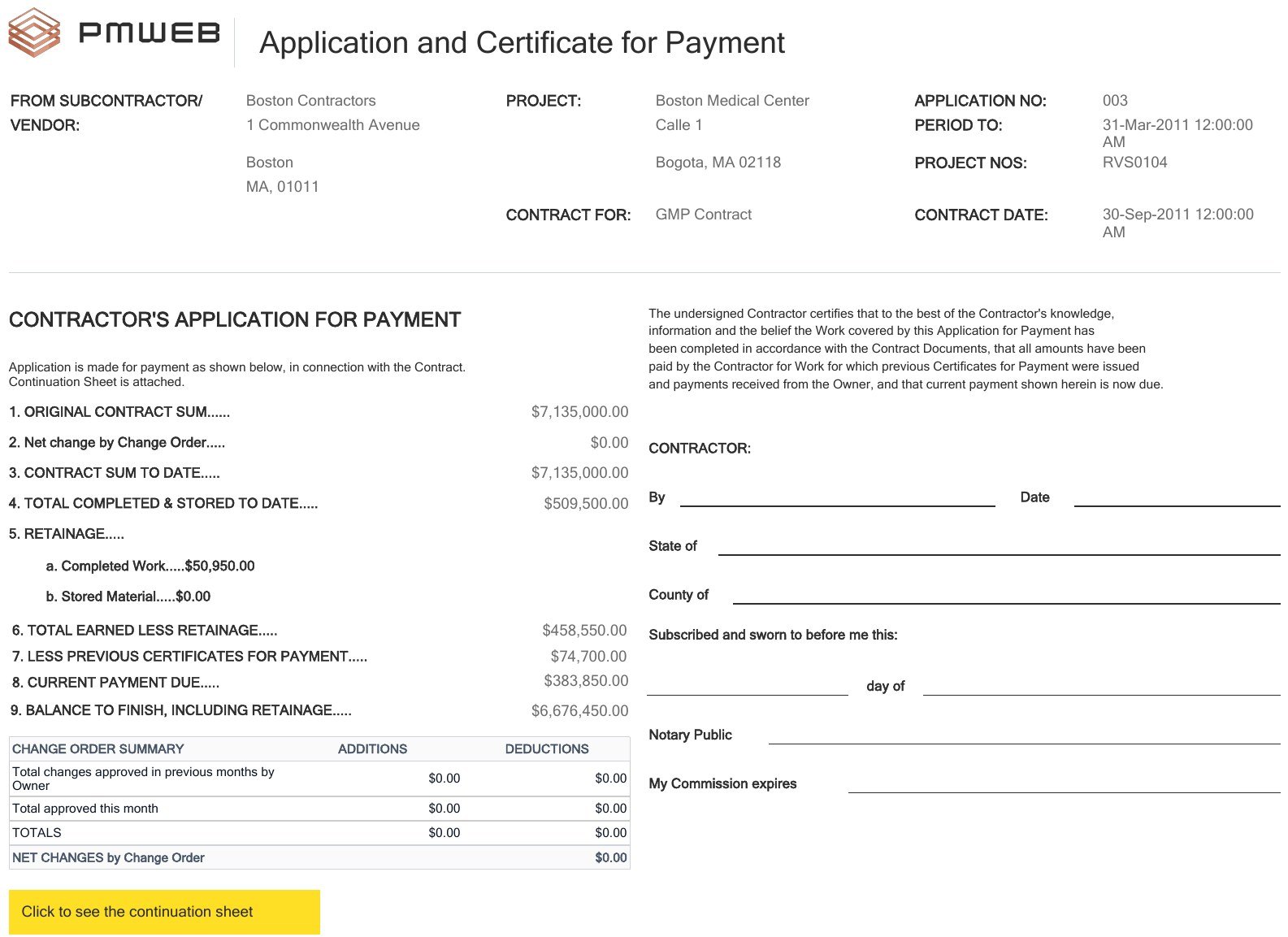
- Progress invoices in the client's required format, generated from the approved progress on the schedule of values.
- Payments received, matched to invoices, with retention held and the days each certificate was outstanding.
The Cost Side: Commitments
Every subcontract and purchase order awarded in Part 4, and every internal commitment from Part 5, is a Commitment in PMWEB. Against each, the contractor administers the full subcontract life cycle:
| Process | What PMWEB controls | Why it matters |
|---|---|---|
| Change orders | Subcontractor variations approved within delegated limits and linked to the budget | No variation is paid unless it is approved and funded |
| Disputes | Claims and disputes logged with value, status, correspondence and decisions | The company sees its exposure before it becomes a dispute it cannot settle |
| Interim payments | Subcontractor applications checked against progress, retention and back-charges | Overpayment and premature release of retention are prevented |
| Payments | Payments made, recorded against each application | Paid-to-date always reconciles with certified-to-date |
Back-to-Back, Side by Side
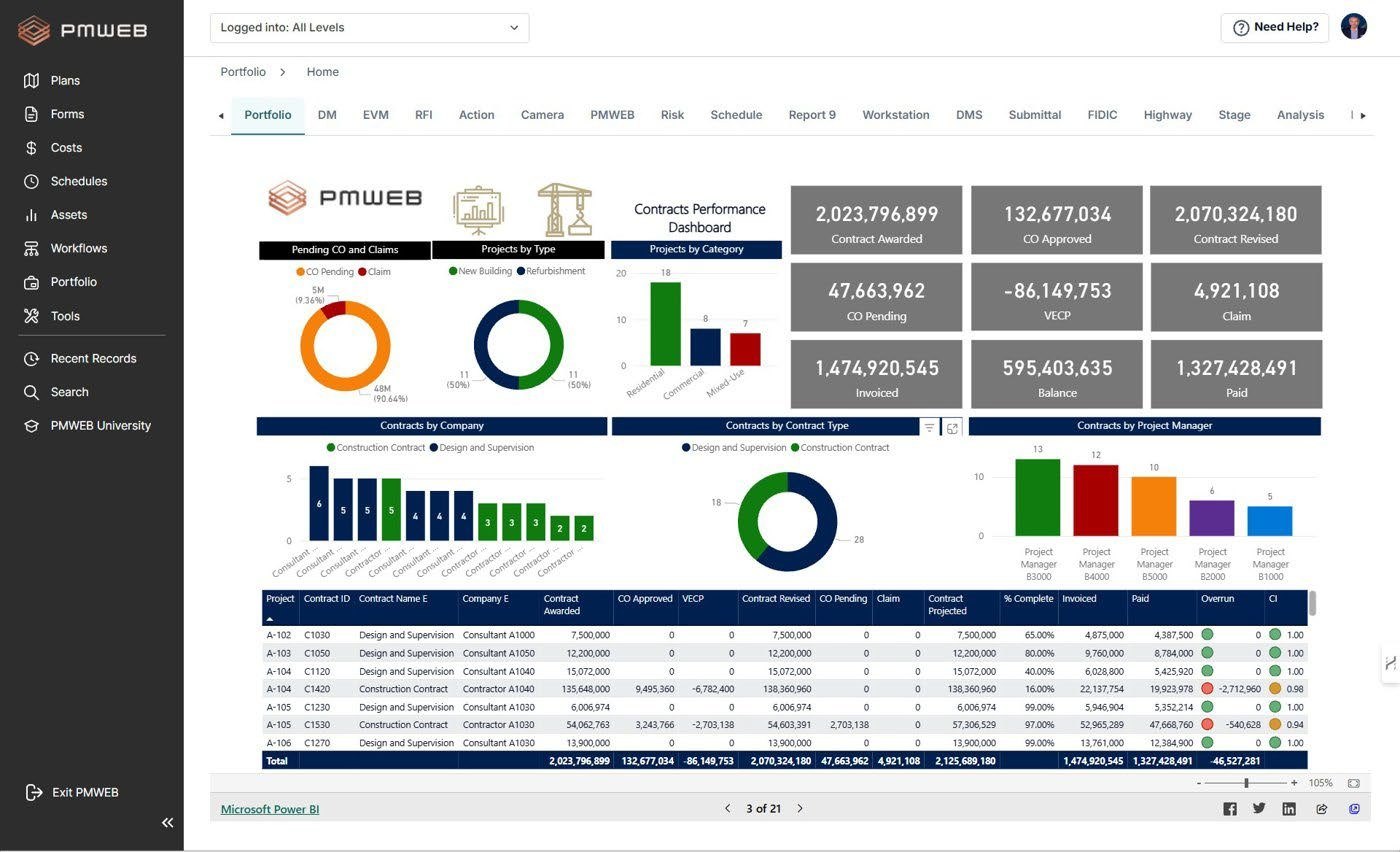
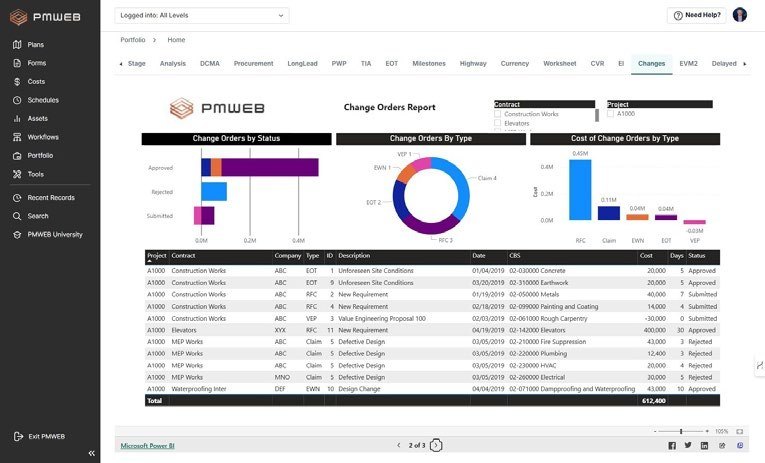
Because both sides are on the same cost codes, PMWEB shows each prime contract change order beside the subcontract change orders it generates, and each client payment beside the subcontractor payments it funds. The contractor sees immediately when it has approved a subcontractor variation that the client has not yet approved, or paid subcontractors faster than the client has paid it.
Cash, Funding and Bank Facilities
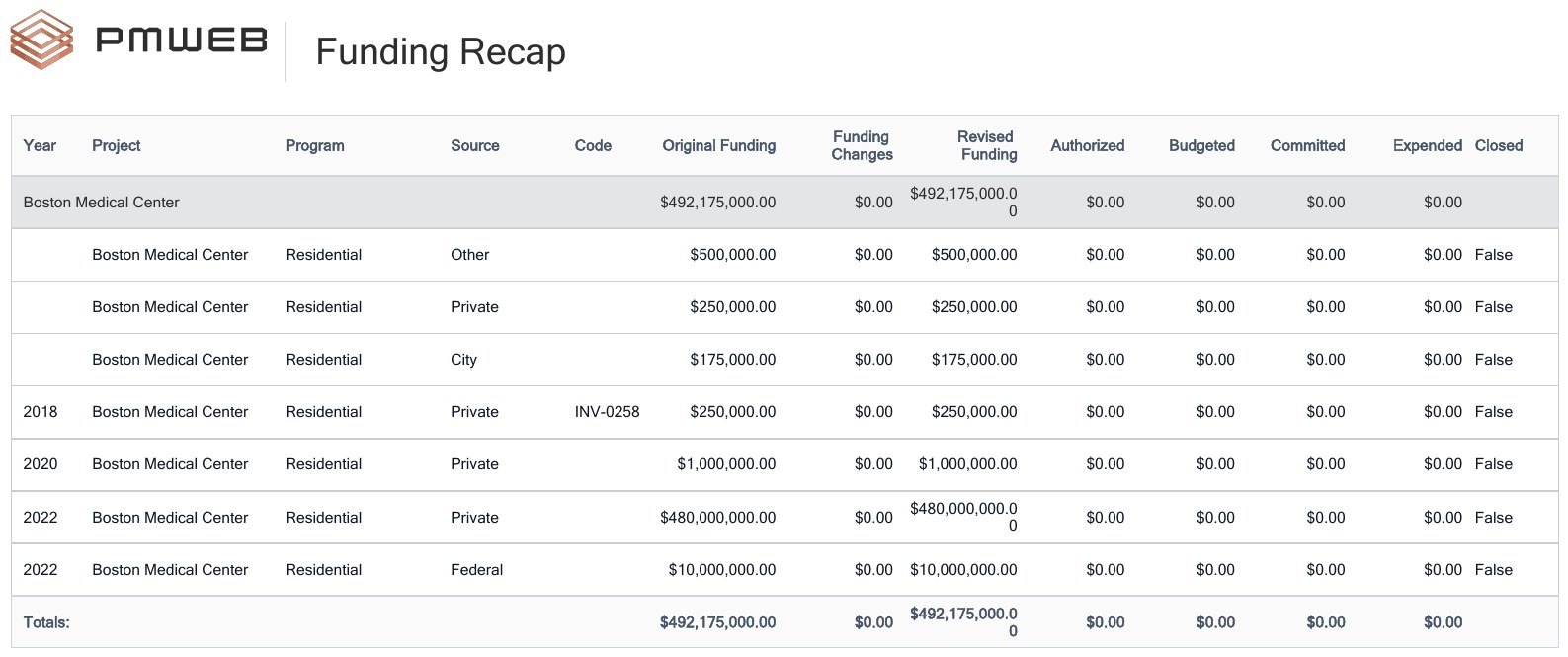
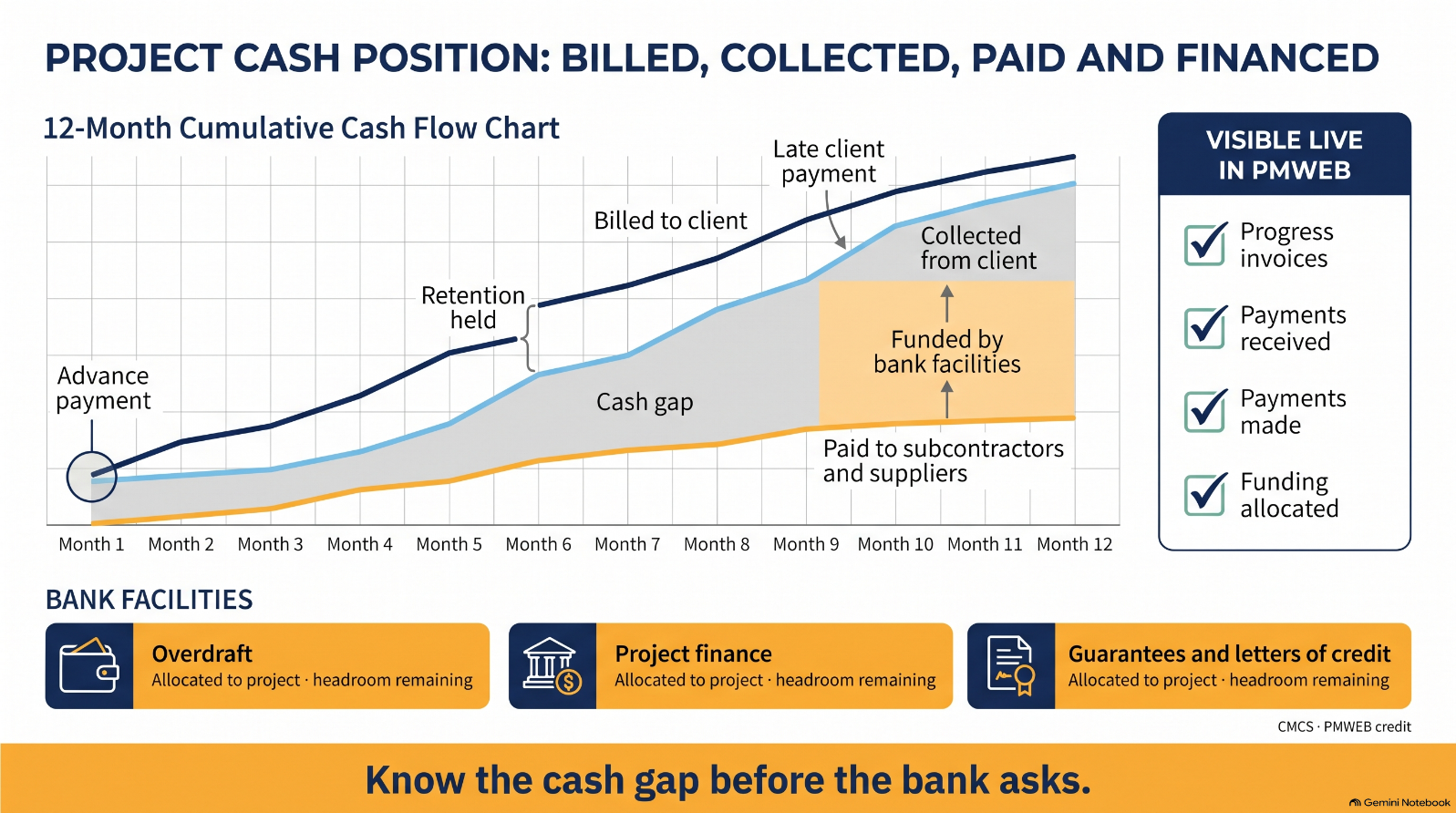
Fast-growing contractors run on bank facilities: overdrafts, project finance, letters of credit and guarantees. PMWEB's Funding module records each facility and its allocation to projects, so management can see how each project's cash gap is financed and how much headroom remains.
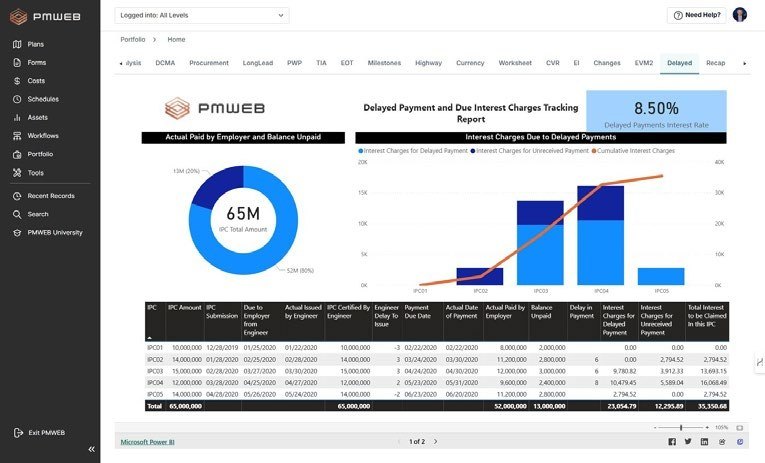
Delayed client payments are tracked with the interest or finance cost they create, giving the commercial team the evidence it needs to claim, and the bank the visibility it needs to keep supporting the business.
The Subcontractor's View
For a specialist subcontractor, the received subcontract is its prime contract. Every variation it claims from the main contractor, every application it submits and every payment it receives is tracked in PMWEB as income, while its own suppliers and sub-subcontractors are its commitments. Delayed payments from main contractors are the subcontractor's biggest risk; PMWEB makes them visible per main contractor and per project.
Where AI Adds Value
PMWEB 2026 AI can answer the questions finance directors ask every week: "Which subcontractor variations have we approved that are not yet approved by the client?", "Which clients are paying beyond their contract terms, and what is it costing us?", "What is the total of open commitment change orders on this project?"
Key takeaway
Contractors and subcontractors live between two sets of contracts. PMWEB manages both in one project record, so every change, invoice and payment on one side is visible against the other, back-to-back exposure is caught early, and cash, funding and delayed payments are visible live, not at month-end.
Next in the series, Part 7: Early Warning and Risk. Building a culture where everyone reports problems while there is still time to act.

Next step
Bring this to your portfolio.
Tell us which processes matter most to you, and we will show them running in PMWEB.