
Article 1 of 10 · PMWEB for RICS Contract Administration
From RICS Guidance to a Digital Contract Administration Practice with PMWEB 2026
RICS tells the contract administrator how to behave. It asks for every instruction in writing, every certificate on time, a running estimate of the final account, and a complete record of "the life of the building contract from inception to completion". Guidance does not enforce itself. A project management information system that holds every contract process in structured form does.
Every capital project owner appoints someone to administer the building contract. Sometimes it is the architect or engineer, sometimes a quantity surveying practice or a project management consultant, and sometimes an in-house team. Whoever holds the role, the Royal Institution of Chartered Surveyors (RICS) has set out what good practice looks like, in its guidance note Contract administration and, more recently, in the contract administration schedule of its Standard Form of Consultant's Appointment.
The practical difficulty is not knowing what RICS expects. Most experienced contract administrators know it well. The difficulty is doing it consistently across dozens of contracts, hundreds of instructions and thousands of documents, and being able to prove afterwards that it was done. Decisions sit in e-mails. Valuations sit in spreadsheets. Notices sit in the inbox of whoever happened to receive them. When the contractor challenges a determination, or an auditor asks how a change was approved, the evidence has to be reconstructed.
This series shows how PMWEB 2026 closes that gap. Over ten articles it walks through the RICS contract administration services, from commencement to the final account, and shows for each one what PMWEB delivers out of the box, where a Custom Form Builder form or an Adaptive Form completes the picture, how workflows enforce the employer's Delegation of Authority (DoA), and how SSRS reports, Power BI dashboards and ERP integration turn the record into management information.
Why this matters to you
- Commercial Directors: one live anticipated final account per contract, built from approved records rather than monthly spreadsheets, so commercial exposure is visible before it becomes a dispute.
- Contract Administrators: every instruction, certificate and determination captured with its evidence and approval trail, so the RICS standard of care can be demonstrated in minutes, not weeks.
- Cost Managers: budget, commitments, change, valuations and forecasts in one cost structure, ready for ICMS reporting and benchmarking.
- Project Directors and owners: a record that belongs to the organisation and outlives every consultant appointment.
What RICS Asks of the Contract Administrator
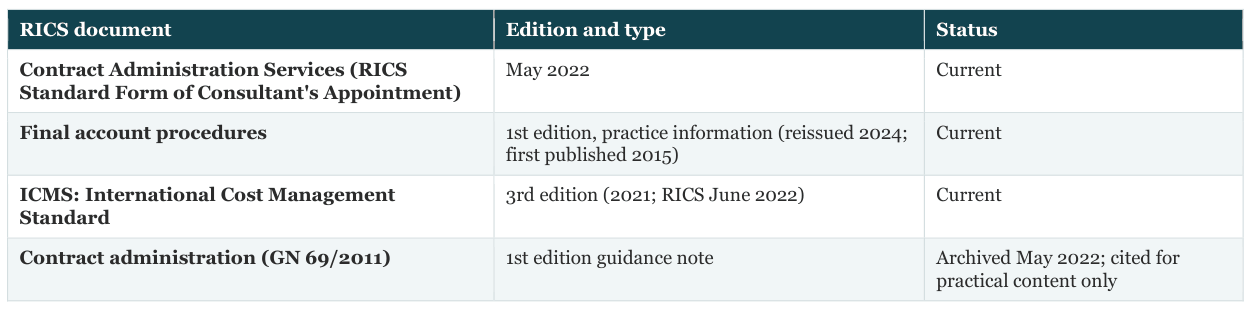
The most detailed RICS description of the role is the 2011 guidance note Contract administration (GN 69/2011). RICS archived it in May 2022 and retains it for information, so this series treats it as a practical reference rather than a current requirement. It starts from a simple position: the contract administrator (CA) administers the terms of the building contract between employer and contractor. It then draws a distinction that shapes everything that follows. The CA has two functions.
- An agency function, in which the CA acts on behalf of the employer: advising, reporting and, within agreed limits, instructing.
- A decision-making function, in which the CA must act impartially between employer and contractor. Either party may challenge a decision, and that right is a benefit of the impartiality.
The guidance lists the key tasks that the standard forms of building contract generally give the CA: chairing meetings periodically inspecting the works giving instructions, including variations or change orders determining applications for extensions of time authorising interim payments certifying the date of completion settling the adjusted contract sum, the final account
It also lists the qualities required: knowledge of the contract provisions, independence and fairness, construction knowledge sufficient to trace the impact of change, the ability to set up "appropriate office procedures and record keeping", and familiarity with critical path programming.
The contract administration services schedule
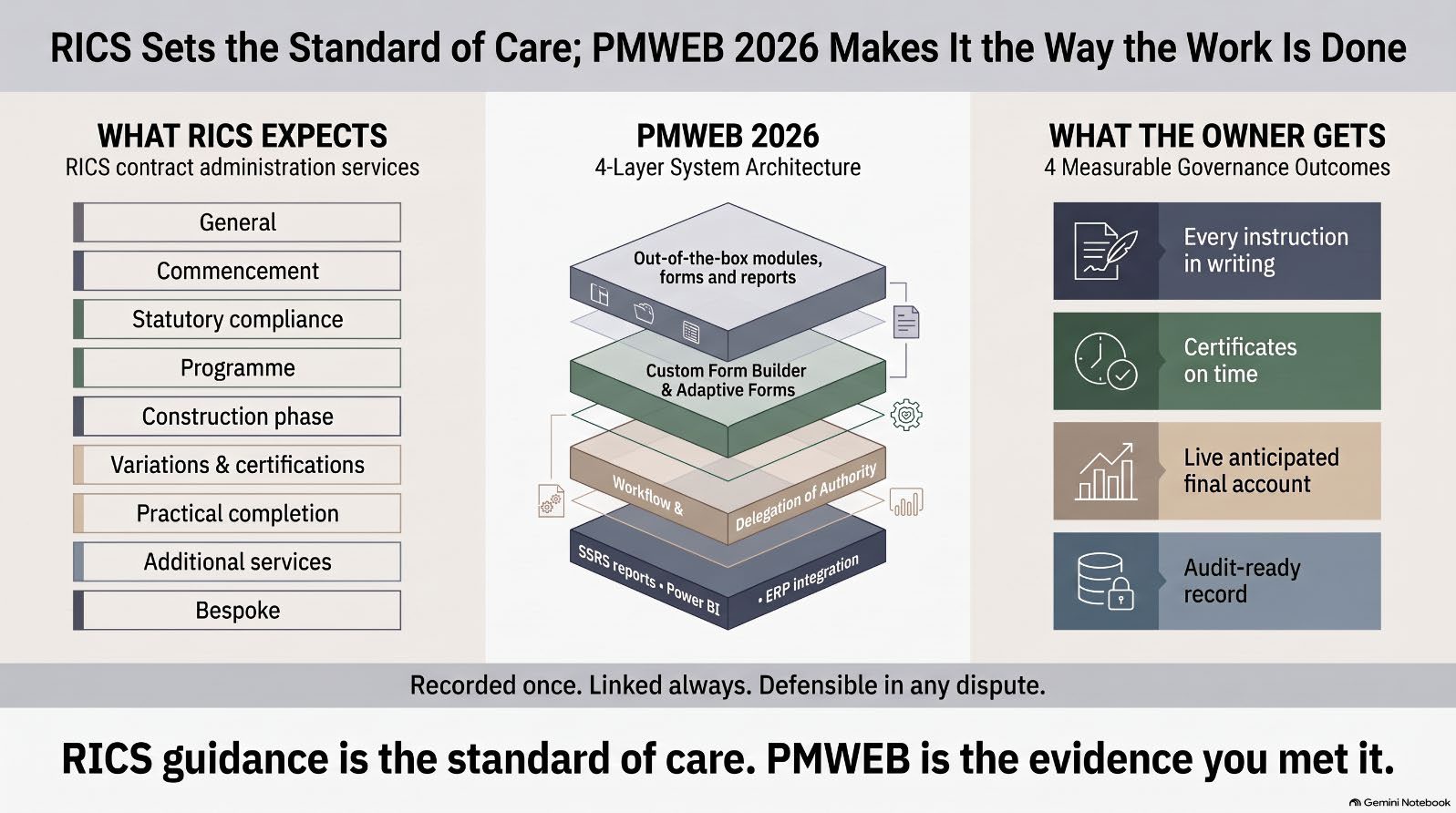
RICS turned these tasks into a schedule that the employer ticks when appointing the CA. The Contract Administration Services schedule of the RICS Standard Form of Consultant's Appointment (May 2022 edition) has nine blocks.

Two features of the schedule matter for digitalisation. First, any service not ticked becomes an additional service, so the scope of the CA's role varies from appointment to appointment. A digital platform has to switch processes on and off per contract, not impose one fixed model. Second, block 8 includes setting up and maintaining a secure project and document management website as a service in its own right. RICS already recognises that the record needs a platform.
The RICS documents behind this series
Readers who hold RICS qualifications will rightly ask which documents are current. The series is anchored on the current RICS Contract Administration Services schedule and current RICS practice documents, and uses the archived 2011 guidance note only for its practical checklists.

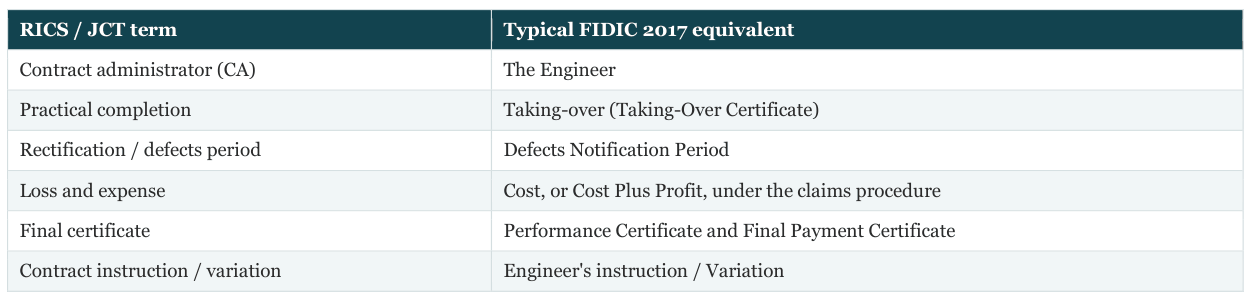
The RICS guidance note is written around JCT contracts, while most GCC capital projects use FIDIC or bespoke forms. The principles carry across directly; only the vocabulary changes. Some RICS references, such as retention "held in trust" and the UK Construction Act, are UK-specific and depend on the governing law.
Why the Standard of Care Depends on the Record
RICS guidance documents have long carried a clear statement of their weight: when an allegation of professional negligence is made against a surveyor, a court or tribunal may take account of relevant RICS guidance in deciding whether the surveyor acted with reasonable competence, and a member who followed it should have at least a partial defence. Departing from recommended practice is allowed, but only for good reason, and the member may have to explain why.
That makes the record the CA's real protection. GN 69/2011 §4.1.4 described what the record must be. It asked for accurate and accessible records, because on a long project "more than one person will act in the role of CA". Records should be identifiable to the contract, dated, attributed to their author and, wherever possible, agreed between the parties so that there is no dispute about their accuracy or authenticity.
Appendix B of the same guidance names the threats. E-mail makes it easy to send more information than anyone needs, and leaves it "sitting on one computer and not accessible to others in the office". Archived electronic data "becomes unusable without active management". In other words, the very tools most CA practices still rely on, e-mail and personal file stores, work against the record RICS expects.
The test a contract administrator should apply: if the person who issued an instruction, valued a variation or determined an extension of time left the project tomorrow, could their successor find the decision, the reasons, the evidence and the approvals in under five minutes?
What Changes When the Process Lives in PMWEB
PMWEB is an enterprise, web-based capital project management platform built on Microsoft .NET with a dedicated Microsoft SQL Server database for each client, deployed as SaaS, hosted by PMWEB (including in-Kingdom options) or on the owner's premises. For contract administration, four characteristics matter more than any individual feature.
One structured record per transaction
Every instruction, RFI, potential change, change order, interim valuation, certificate, notice and claim is a numbered PMWEB record with defined fields, attachments and links. It is not an e-mail thread or a spreadsheet tab. Because the fields are defined, the same question can be asked of every record: when was it received, when was it answered, what did it cost, who approved it?
A workflow on every record
Each record type carries a business process. Each step names a role rather than a person, an allowed duration, the actions available (approve, return, reject, submit) and conditions that add or skip steps. The workflow captures who acted, when and with what comment, automatically. That is the RICS record of decisions, created as a by-product of making them.
A change order links back to the contract instruction, RFI, drawings and meeting minutes that caused it, and forward to the budget transfer that funded it and the interim valuation that paid for it. When a decision is challenged, the chain is already assembled.
Data that belongs to the owner
Because each owner has its own dedicated PMWEB database, the record outlives any consultant's appointment. When a CA firm changes, the new firm inherits a working system, not a box of files.
How PMWEB 2026 Covers the Nine RICS Service Blocks
The table below maps each RICS block to the PMWEB modules that deliver it out of the box, and to the extensions CMCS typically configures. The articles that follow take each row in turn.

Most of what RICS describes is already a PMWEB module with its own forms and SSRS reports. An implementation therefore configures rather than develops. The gaps are mostly checklists, registers, notices and letters that each form of contract words differently, which is exactly what PMWEB's two form-building tools are for.
Custom Form Builder or Adaptive Form?
Throughout the series, each extension is assigned to one of the two tools.
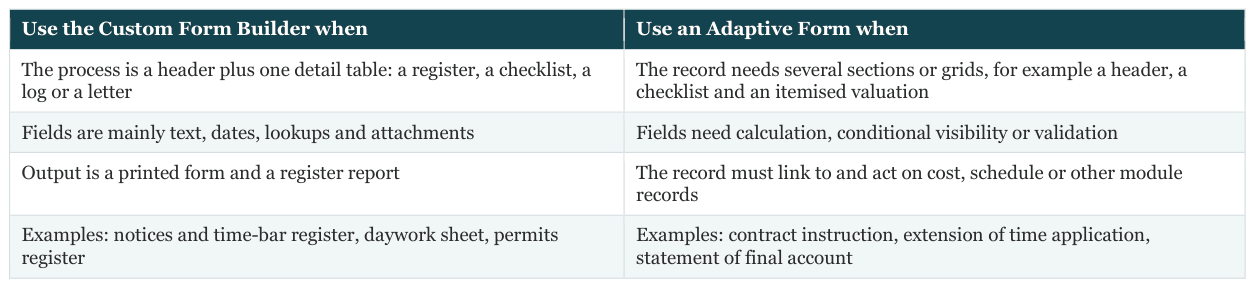
Both tools produce first-class PMWEB records: numbered, secured by role, carrying attachments, linked to other records, routed through workflow and reportable in SSRS and Power BI. An Adaptive Form record opens with the common Main, Notes, Attachments and Workflow tabs, so users meet the same layout whatever the process.
The CA's dual role is the most delicate part of RICS practice, and PMWEB's workflow handles it explicitly.
In the agency function, the CA acts within the authority the employer has delegated. PMWEB holds that authority as workflow conditions. An instruction within the CA's spending authority is issued by the CA; above it, the workflow inserts the employer's approval before issue. GN 69/2011 §3.1.5 asks for the CA's authority over contingency, provisional sums and unforeseen work to be confirmed at appointment. In PMWEB it is confirmed in the configuration and enforced on every record.
In the decision-making function, the CA must be seen to decide impartially. The workflow records the contractor's submission, the CA's assessment and reasons, and the date the decision was issued, in a sequence neither party can rewrite. Where the employer is informed of a determination rather than asked to approve it, the workflow sends a notification instead of an approval step. Where the particular conditions require the employer's approval before the CA acts, as many GCC contracts do for extensions of time or variations above set limits, PMWEB adds that approval step by condition. The distinction RICS draws is visible in the process design.
The Control Centre the Employer Actually Sees
GN 69/2011 §4.1.7 asks the CA to keep the employer informed generally, to identify the employer's obligations and risks at appropriate times, and to keep "a running record of the estimated final adjusted contract sum". It lists what that running record must include: preliminaries, specified works, unspent provisional and contingency sums, additions, omissions, employer variations, anticipated variations, loss and expense, prolongation costs and potential contractor claims.
When every one of those items already exists as a PMWEB record, the report stops being a monthly compilation and becomes a live view. Screenshot S1 shows a Power BI report embedded in the PMWEB dashboards area, reading directly from the PMWEB records for one contract.
certification and contractual time bars for contract MC-001
The waterfall moves from the original contract sum of AED 412.50 million to an anticipated final account of AED 437.94 million. Each step is a set of PMWEB records the employer can drill into: approved change orders, probable potential change orders, assessed loss and expense, and unspent provisional sums. The bar chart shows gross value certified each month. The table lists every certificate and contractual time bar falling due in the next 31 days, drawn from the notices register described in Article 3.
What the Rest of the Series Covers
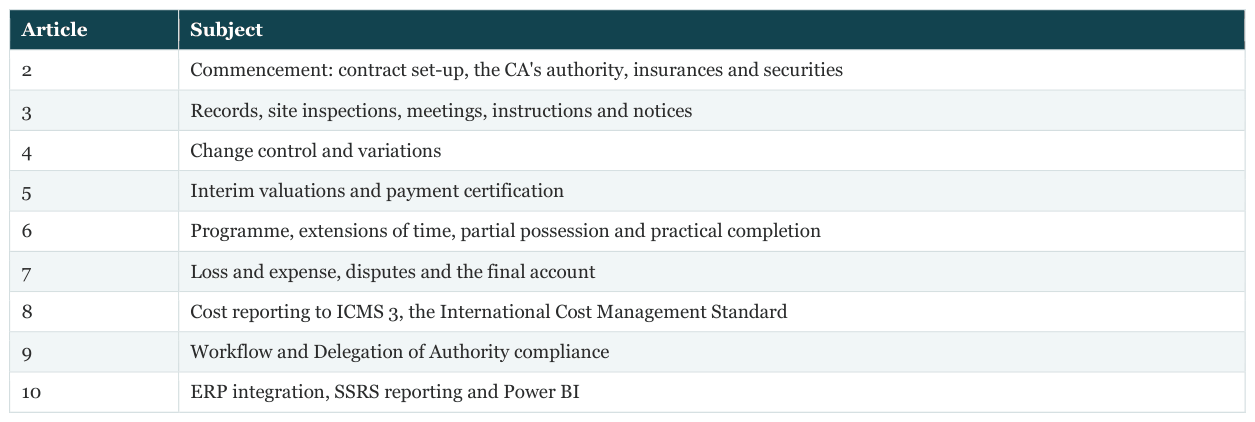
Every article uses the same sample contract, MC-001 Main Construction Works on the Project Alpha Mixed-Use Development, so that figures can be followed from one article to the next.
What Changes for Your Organisation

Record lost when the consultant changes Record held in the owner's own PMWEB database
What the Owner and the CA Must Put in Place
- Agree the RICS scope per contract. Tick the services schedule and switch on the matching PMWEB processes, so the system reflects the appointment.
- Write the DoA once, as configuration. Spending authority, approval limits and notification rules belong in workflow conditions, not in a PDF.
- Decide the record structure before the first instruction. Folder structure, numbering, cost breakdown and form designs are set at commencement.
- Make PMWEB the only channel for contractual communications. An instruction, notice or certificate that exists only in e-mail is outside the record.
- Report from the record. Monthly reports, dashboards and the final account are generated from PMWEB, never re- keyed.
RICS references for this article
RICS documents are UK-based; apply them in the GCC subject to the governing law and the form of contract.
When your contract administrator is asked to prove that a certificate, an instruction or an extension of time followed RICS practice, how long does it take to assemble the evidence?

Next step
Bring this to your portfolio.
Tell us which processes matter most to you, and we will show them running in PMWEB.