
Article 2 of 14 · PMWEB for PMC Firms: Digitalising the CMAA Standards of Practice
Delivery Methods: CM Agency, CM at-Risk, Design-Build and PPP
The delivery method decides who holds the risk, who holds the contracts and who the construction manager answers to. If the PMIS is set up the same way for every method, the data will quietly tell the wrong story about all of them.
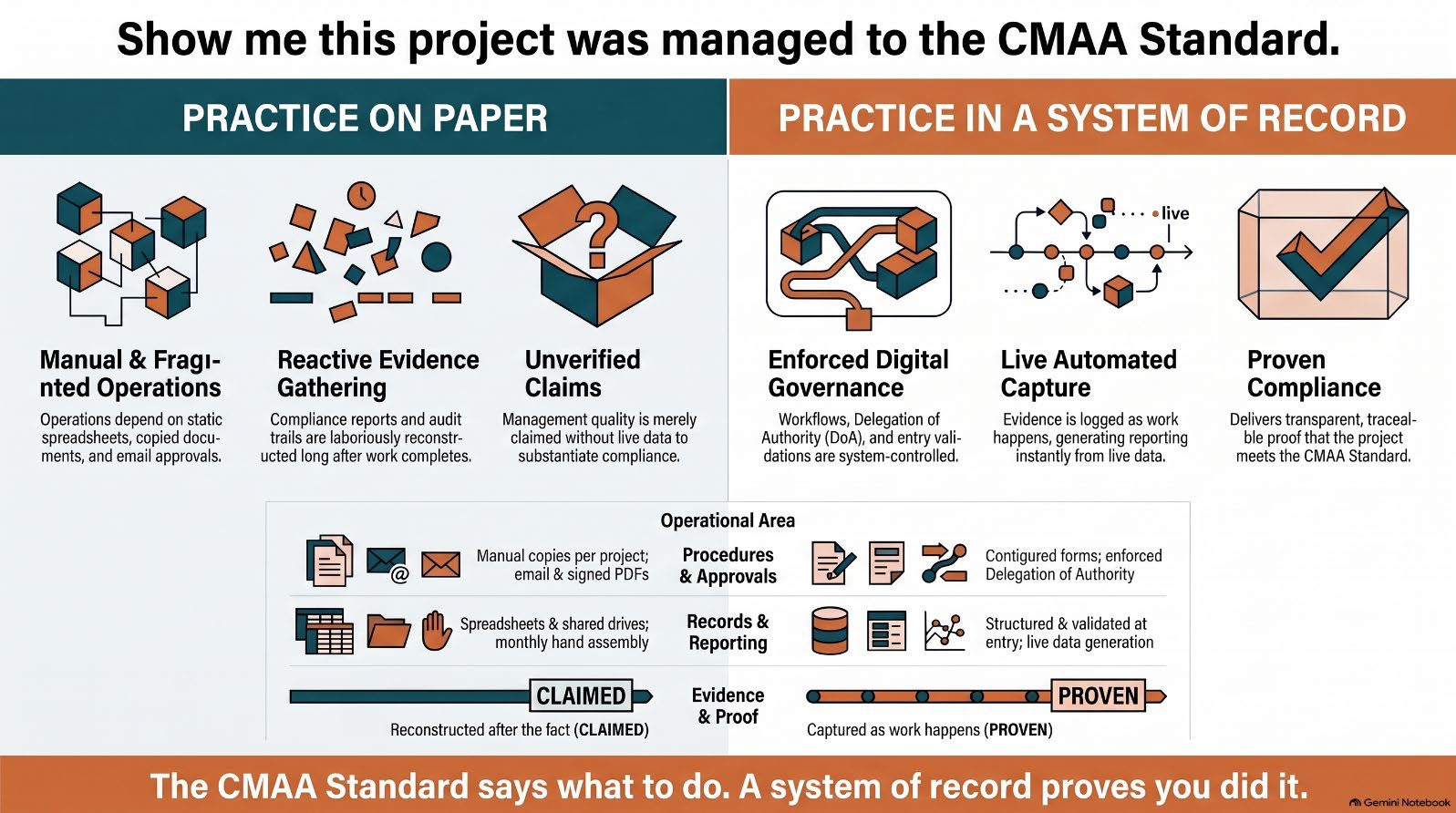
In the first article of this series I argued that a PMC firm's standard of practice only becomes real when it is executed and evidenced in a system of record. The first place that argument is tested is the delivery method. A PMC firm in the Gulf may, in the same month, be acting as the owner's agent on a Kuwaiti ministry building delivered under a traditional employer-designed contract, advising a Dubai master developer on a construction manager at-risk style two-stage tender, supervising a design-build hospital for a Qatari health authority, and reporting to lenders on a social infrastructure PPP.
Each of those engagements changes the construction manager's role. It changes who signs the trade contracts, how the price is formed, where contingency sits, what the owner's representative is allowed to approve, and which external parties need to see which data. Yet many PMC firms run all four on the same generic project template, with the differences living in the heads of the project director and a handful of spreadsheets.
The result is predictable: a GMP tracked as if it were a lump sum, contractor design reviewed like a shop drawing, CM contingency reported as owner contingency. None of this is a failure of the CMAA Standard. It is a failure to configure the system to the contract.
This article shows how PMWEB is configured so that contract types, cost structures, workflows and external- party access follow the method rather than fight it. Each PMC firm and each client will execute these methods in its own way. PMWEB is configured to the firm's procedures; the CMAA Standard stays the reference.
What the CMAA Standard Expects
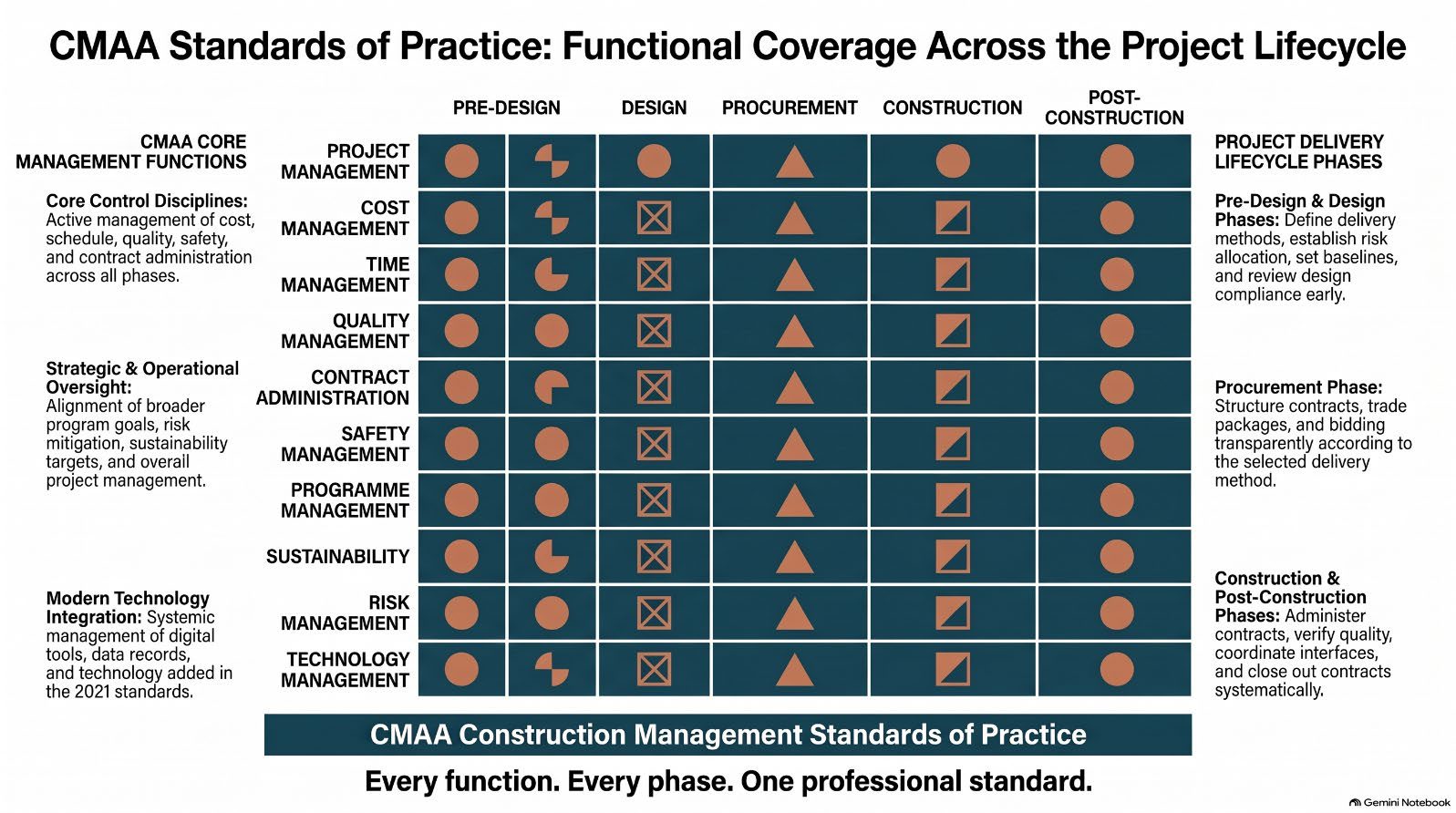
The CMAA Standard treats delivery method as a foundational decision, not an administrative detail. It expects the CM to help the owner understand the available methods and their implications for risk, cost certainty, schedule and control; to define clearly, at the start, the roles and responsibilities of each party under the chosen Those expectations play out differently across the phases of a project, and a well-configured PMIS has to carry each of them.

How GCC PMC Firms Typically Do It Today
- One template for every method. The same project setup, cost codes and workflows are used whether the PMC is an agent or reporting on a PPP, so method-specific controls live outside the system.
- GMPs tracked as lump sums. Under two-stage or CM at-risk style arrangements, the cost of work, fee, general conditions and CM contingency are collapsed into one number, and the owner loses the open-book view the arrangement was meant to give.
- Design-build design reviews mixed with shop drawings. Contractor design packages are reviewed through the submittal log with no reference to the owner's requirements they must satisfy.
- Multiple primes managed contract by contract. When an owner holds several prime contracts, interfaces and shared site obligations are tracked in meeting notes rather than as linked records.
- PPP reporting assembled by hand. The lenders' technical adviser and the grantor's technical adviser each receive a monthly pack built from exports, with no controlled access to the underlying data.
- External parties given too much or too little. Either nothing is shared and everything is emailed, or a shared login exposes data the party should never see.
How PMWEB Digitalises It
The principle is simple: the delivery method is captured once, at project setup, and it drives everything downstream. In PMWEB that means a delivery method value list on the project record, a project template per method in the firm's practice library, and contract types, cost structures, workflows and security roles that follow from the choice.
CM Agency and multiple-prime
Under agency, the owner holds the contracts and the PMC acts as its adviser and representative. PMWEB reflects that by recording each prime contract as an owner commitment, with the PMC appearing in workflows as reviewer and recommender while approval sits with the owner's authorised signatories under the DoA. The PMC's own professional services agreement is held as a separate commitment, so the owner can see the cost of management alongside the cost of construction. Where the owner uses multiple primes, each prime is its own commitment under one project, with a shared schedule, interface RFIs linked to more than one contract, and an interface register built with Form Builder so that site logistics, access and handover dependencies are visible rather than remembered.
Design-build and progressive design-build
Under design-build, the owner's requirements (often prepared as bridging documents by the PMC or a separate consultant) become the yardstick. PMWEB holds the owner's requirements as controlled documents, and a dedicated design review workflow, distinct from the shop drawing submittal workflow, routes each contractor design package to the reviewing disciplines with a compliance checklist that references the relevant requirement. Payment is configured as milestone-based or schedule-of-values-based depending on the contract, and variations are linked to the requirement they alter. For progressive design-build, the first phase is set up as an open-book commitment for design development and pricing, with the second-phase lump sum or target price recorded as an amendment when the owner decides to proceed.
PPP In a PPP the PMC may act for the grantor, for the lenders or as an independent engineer, and each role sees the project differently. PMWEB configures the project company's EPC contract, construction milestones and output specification compliance as structured records, and grants external-party access through role-based security so that the lenders' technical adviser sees progress, milestone evidence and risk data without seeing the grantor's internal correspondence. Monthly reports to lenders and grantor are generated from the same data, in the format each party requires.

Configuring PMWEB to Your Firm's Procedures
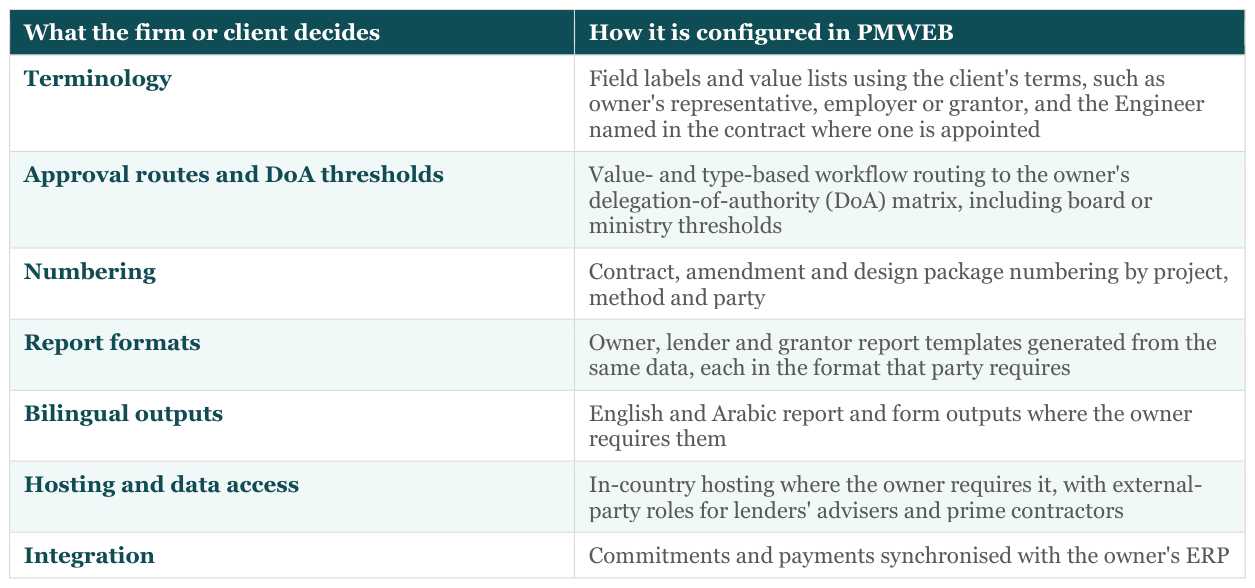
The CMAA Standard describes the CM's role under each method; the firm and its client decide how that role is exercised on a given mandate. Those decisions are configuration choices in PMWEB, made once in the firm's method templates and tailored per client.


Evidence That the Practice Is Working
Indicators such as these show whether the configuration is working; targets are for each firm and client to set.
Key takeaway
The delivery method is the first configuration decision a PMC firm makes on any project, and every later control depends on it. When PMWEB records the method at setup and applies the firm's template for that method, contract types, cost structures, workflows and external access follow automatically, and the CM's role under the CMAA Standard is executed and evidenced rather than described.
This is alignment, not certification. The CMAA Standard stays the reference, each client's contract and approval chain shapes the execution, and each firm configures PMWEB to its own procedures. The payoff is data that tells the true story of each method.
Next in the series: Article 3 — Project Management: Turning the CM Plan and Procedures Manual into Workflows

Next step
Bring this to your portfolio.
Tell us which processes matter most to you, and we will show them running in PMWEB.